Maybe it's because it's one of the first big-impact volcanic eruption since the coming of the Facebook/Twitter/Name-your-favourite-blog-provider Age. But it just seems crazy how much publicity Eyjafjallajökull (EFJ) got. Granted, it did cause an unprecedented level of transportation chaos in Europe, and as a consequence, in the rest of the world. But it has also generated a wealth of articles, posts and updates - in a surprisingly short amount of time.
First of all - the name. I have already talked about this in my previous posts - with various videos featuring british journalists trying to say the "E word", or tips on how to remember the name "Ayva - Fiat - Yoghurt - Merkel(said very fast)". Here my current favourite explanation of how EFJ got its name: It was the cat's fault!!
Then the jokes. Although as found on one site "It's a bit early for Iceland volcano jokes. We should wait for the dust to settle"... if you try to search "Eyjafjallajokull jokes" it finds 107'000 search results...! Here in no particular order, a few of my favourite ones (sorry - I can't find any good credits for the quotes....! But they were all found on random websites, i.e. I for sure cannot claim any credit for them..!)...
About "we wanted cash, you gave us ash" - official excuse of Iceland: The letter "C" doesn't exist in the icelandic alphabet, so ash is all you'll get.
Or: Iceland goes bankrupt, and then manages to set their island on fire. This has insurance scam written all over it.
There is no pleasing the English. Last time they got the Ashes they were all over it.
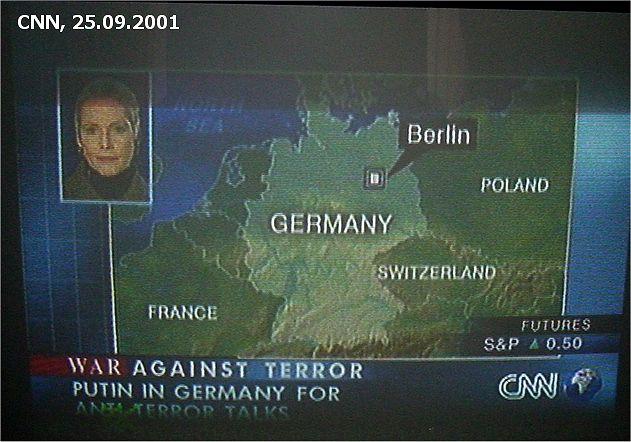
And then, of course, CNN always has to have one funny one - in a "ha-ha let's laugh about how stupid this person is", sad kind of way - Iceland can't have volcanoes because it's too cold? Really? I guess, in a world where Switzerland is east of Germany, for sure volcanic activity could be linked to the average air temperature.
The one that really surprised me (but I should know better by now!?) - is that you can already order t-shirts or underwear featuring Eyjafjallajökull. Fancy owning undies saying "Volcano, Baby!" on them?
Thursday, April 22, 2010

Monday, April 19, 2010
Icelandic 101

Eyjafjallajökull is still erupting. And people (including myself) are still struggling to pronounce the name properly - here a pretty entertaining little video on the attempts by british journalists (thanks Paul :) ). But you'll admit it - it is not an easy one to pronounce (swiss german meets aztecan?). Since I have been trying to learn a little Icelandic, and many people have asked me about the origin of that language, I am going to leave the eruption aside for the day and go on a little linguistic tangent - mostly borrowed from Wikipedia (but before I do that - here a new compilation of amazing pictures of the volcano, and of life in the vicinity of the volcano).
Icelandic is a north germanic language related to Old Norse, which is essentially the language spoken by Vikings between the 8th and the 14th century. The alphabet consists of 32 letters - two of which are derived from Old English and only found in Icelandic, Faroese and some local scandinavian dialects. They are eth (ð) and thorn (þ), and the latter is actually a runic letter - and their pronounciation is generally similar to that of "th" in english. Generally speaking, most european languages have evolved towards a simpler grammar with respect to Latin and ancient Greek, but Icelandic has retained grammatical rules pretty similar in complexity to that of Latin - and in fact, it has evolved so little since the Vikings that people fluent in Icelandic can read the original versions of the Old Norse Viking sagas without too much trouble (the above picture is an excerpt of Njáls Saga).
But I did spend many years in school studying Latin and ancient Greek, so never mind the grammar - I haven't gone that far into my icelandic studies yet anyways. The first nightmare arises from the icelandic pronounciation rules - despite the fact that I am already familiar with languages that have a rather strange sound to them (swiss german - say Chuchichäschtli!) or no apparent correlation between written letters and the sounds you are supposed to generate (english - think "though/through/enough/plough"). So for instance, in Icelandic the letters "hv" sometimes sound like "qu", having a "l" or an "n" after the letter "f" turns the latter into a "p" but "nd" after "f" turns our f into an "m". But my favourite rule has to do with our beloved icelandic volcano, and I am taking this from my "Colloquial Icelandic: The Complete Course for Beginners" book: "ll" is pronounced "tl" , except in loan words and pet names. Pet names? Now that sounds promising - a language that has rules for pet names. What we can learn from this is that Eyjafjallajökull being no pet, we should really pronounce it "Eyjafjatlajökutl" - not without reminding me of Popocatéptl or Ixtaccíhuatl, aztecan names for two volcanoes near Mexico City...!
Sunday, April 18, 2010
Eruption - continued.

Day 5 of the explosive activity at Eyjafjallajökull Volcano, and many european airports remain closed. The eruption is still sending ashes 8km into the atmosphere, and doesn't show any signs of weakening - for more details on the ongoing eruption, check the webpage of the nordic volcanological institute at the university of Iceland, or this site showing various satellite images and animations of the evolution of the plume. And just in case you wanted to see a little photographic summary of the eruption that started on March 20th, here a very nice collection of 18 pictures.
Some of the most impressive images of the current explosive eruption can be found on Stromboli Online - where I found the image at the beginning of this post. I have been wondering what causes lightning in eruption clouds, so I did a little research on this topic. It seems that the mechanisms are quite different to those leading to thunderstorms, and obviously the processes occuring in the eruption plume are rather complex and not fully understood - and only few studies have been published on the topic. I found a lot of useful information in a recent journal article talking about it (James, M.R. et al., 2008, Electric Charging of Volcanic Plumes, Space Science Reviews, Vol, 137, pp. 399-418). I don't understand at all the details of the article, but my understanding of it is, in a nutshell: There is a difference in electric charge between the bottom and the top of the eruption plume. The charging itself happens primarily due to two processes: Electromagnetic emissions due particles interacting with each other, or when particles break; and the very rapid disruption of water surfaces (by boiling of water, for instance when water (or ice!) hits molten rocks at about 1200C. I did not know that boiling water causes charging! But it is somehow linked to the fact that water molecules are strongly polar, i.e. there is a difference in electrical charge between the oxygen atom and the two hydrogen atoms). When the difference in charge reaches some threshold, lighning occurs. (If anyone who reads this thinks I am totally off the mark, please do let me know!!). Confusing, but beautiful!
Oh, and in case you were wondering how the CO2 put out to the atmosphere by Eyjafjallajokull compared to that "saved" by canceling 60% of flights in Europe: On average in one normal day, close to 350'000 tons of CO2 are released by commercial flights in Europe. The current situation saves about 206'000 tons of CO2 - compare it to a mere 15'000t produced by Eyjafjallajokull... (Here the website where I got that from).
Thursday, April 15, 2010
Eruption!

Two facts about me: 1) I study/am passionate about volcanoes, and 2) I am due to fly to Iceland in 2.5 weeks to live there for at least two years. To study volcanoes, precisely.
One fact about Iceland: There is a volcano erupting there! Now! Spectacularly! In a "let's shut down all northern european airports" kind of way!
One more fact about me: I am *not* in Iceland yet! Why? Why!
In any case - Eyjafjallajökull Volcano is erupting. Here a little compilation of some facts, photos and videos of the eruption, that started with a fissure eruption on March 20th, 2010 - click here for some amazing video footage of it. After having done the fissure eruption thing for 3.5 weeks, it started erupting more vigorously yesterday, sending ash high into the stratosphere. This latest event produced a very large ash plume, which immediately started drifting towards the south-east. This has been causing all sorts of mayhem in european airports, as a number of major airports, such as London Heathrow, were closed because of the very abrasive particules that are carried in the plume and have devastating effects on jet engines - as the very fine rock fragments erode the metal in the engine, clog fuel and cooling systems and forms melt films in the combustion chamber - here some more details about it. As is the case for several volcanoes in Iceland, it is covered by an ice cap, which has already started to cause all sorts of trouble (fire + ice = ??!) Stromboli online has, as always, some very nice pictures of the most recent lahars - mud flows caused by volcanic eruptions.
Several questions now arise - how long is the eruption going to last? How long can such an volcano produce an ash cloud susceptible to cause major disruptions to air travel? Can you imagine a situation where most european airports are closed for a week? A month? 6 months? Fellow geoscientists, to your models and calculators - we need to know! Most of all, I need to know if in order to start my project in Iceland on May 3rd, I need to row, row, row my boat all the way from Lausanne, Switzerland to Reykjavik, Iceland?
PS. - Here you can learn how to pronounce this wonderful word. By the way: It means "Island mountain glacier"...
Tuesday, April 13, 2010
Home old home.

I just wrapped up two years of life on the East Coast of the US... now I am just spending a few weeks in Switzerland, relaxing, before moving to the next adventure, which will take place in Iceland.
I have been staying with my sister and her family in the french-speaking part of the country. Today, I went to Yverdon-les-Bains, on the southwest end of Lake Neuchatel. I lived there from the age of 9 months, till the end of high school. It's one of those places that I never really paid particular attention to while growing up - it was just "home". Then I moved away, and so did my family - so it just became "the past". But today it struck me that it's actually a very cool place. For one, it has a medieval castle - Peter II of Savoy started getting it built around 1259. 1259? Switzerland wasn't even a country at the time -a mere 44 years after the Magna Carta. It would take another 350 years or so for the first (recorded) sighting of Australia by Europeans, and America was inhabitant by Mount Builders; The Little Ice Age would set in centuries later. But the castle isn't the only ancient building feat in the town. It goes way back, with still impressive remnants of a roman military stronghold built around 325 AD. But the one I really like: We even have our own little Stonehenge. Maybe not quite as "hengey" as the real one, but impressive nevertheless, and dating to 3000 BC. (Here a little tangent - Eddie Izzard's view on Stonehenge).

So I think that growing up in a place like this is probably part of the reason why I will end up in Europe at some point. I need old, history-laden building around me, I need old cobble-stoned streets, I need roman ruins, I need to be reminded of the fact that whilst we think that with our current engineering and our urge to downsize every aspect of our technologies we are clearly way cleverer than our forefathers, there are already millenia worth of tremendous, majestic building accomplishments. I need to realise that all we have now is but due to the legacy from the past, and that we'd better be cautious, preserve it and enjoy it while it's still time.
Subscribe to:
Posts (Atom)